Blocked Drains in London
London drains can be complicated by shared runs, alterations and poor access. Even so, the first clues are straightforward: what is backing up, which chamber is full, and whether neighbours have the same problem.
Start with what is backing up
In London properties, access can be awkward, so use any safe chamber before assuming where the blockage lies. A full chamber and a clear one farther downstream give a definite section to investigate; a clear chamber with one slow appliance keeps the problem closer to the building.
Check with Thames Water where the problem may be shared
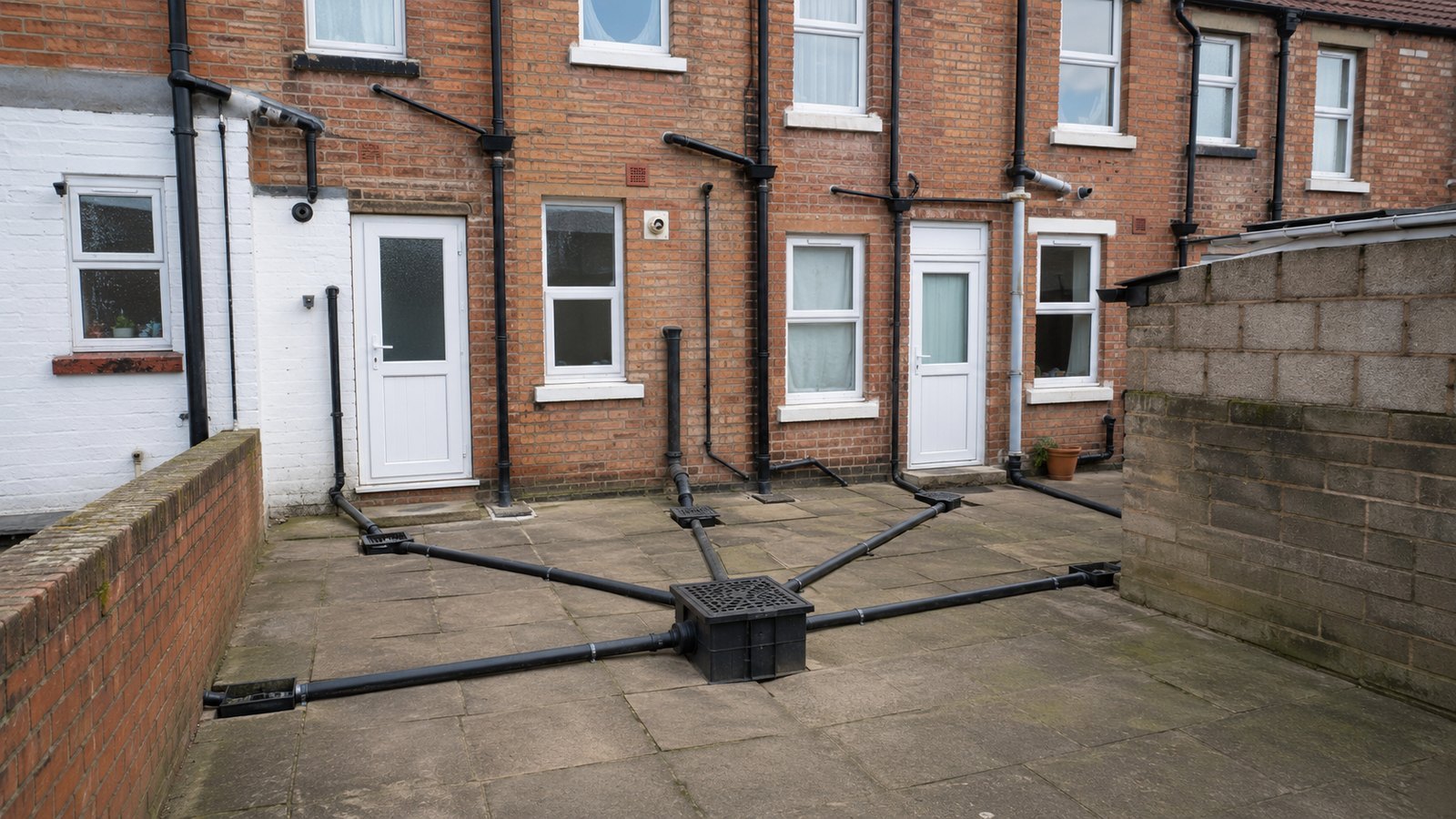
Dense terraces, flats and converted buildings can make the physical route of older drainage less obvious, particularly where later extensions cover former yards or inspection points.
If neighbouring properties are affected, contact Thames Water before assuming the blocked section is privately owned. Their current guidance is available at Thames Water.
If the same drain keeps blocking
If the same run keeps failing, ask for the blockage distance to be measured from a fixed chamber. After cleaning, CCTV at that point can show whether the problem is root entry, scale, a stepped joint or deformation rather than just another load of paper.
Choose the repair after you have seen the defect
Before accepting excavation or lining, ask for the footage, the measured location and the reason that repair method fits the defect. In a paved yard or beneath a building, accurate location can make a large difference to disruption and cost.
Put the job out for local quotes
Through MyJobQuote, details of your drainage problem can be sent to local contractors, with up to three invited to quote. The quotation process is run by MyJobQuote rather than by BlockedDrainsUK.com.
Invite contractors to quoteMyJobQuote is an independent third-party service. Any quotation or contract is with the contractor concerned.