Displaced Drain Joints
A displaced clay joint matters most when one pipe edge projects into the bottom of the flow. Toilet paper and wipes can catch on that lip even though the rest of the drain looks clear.
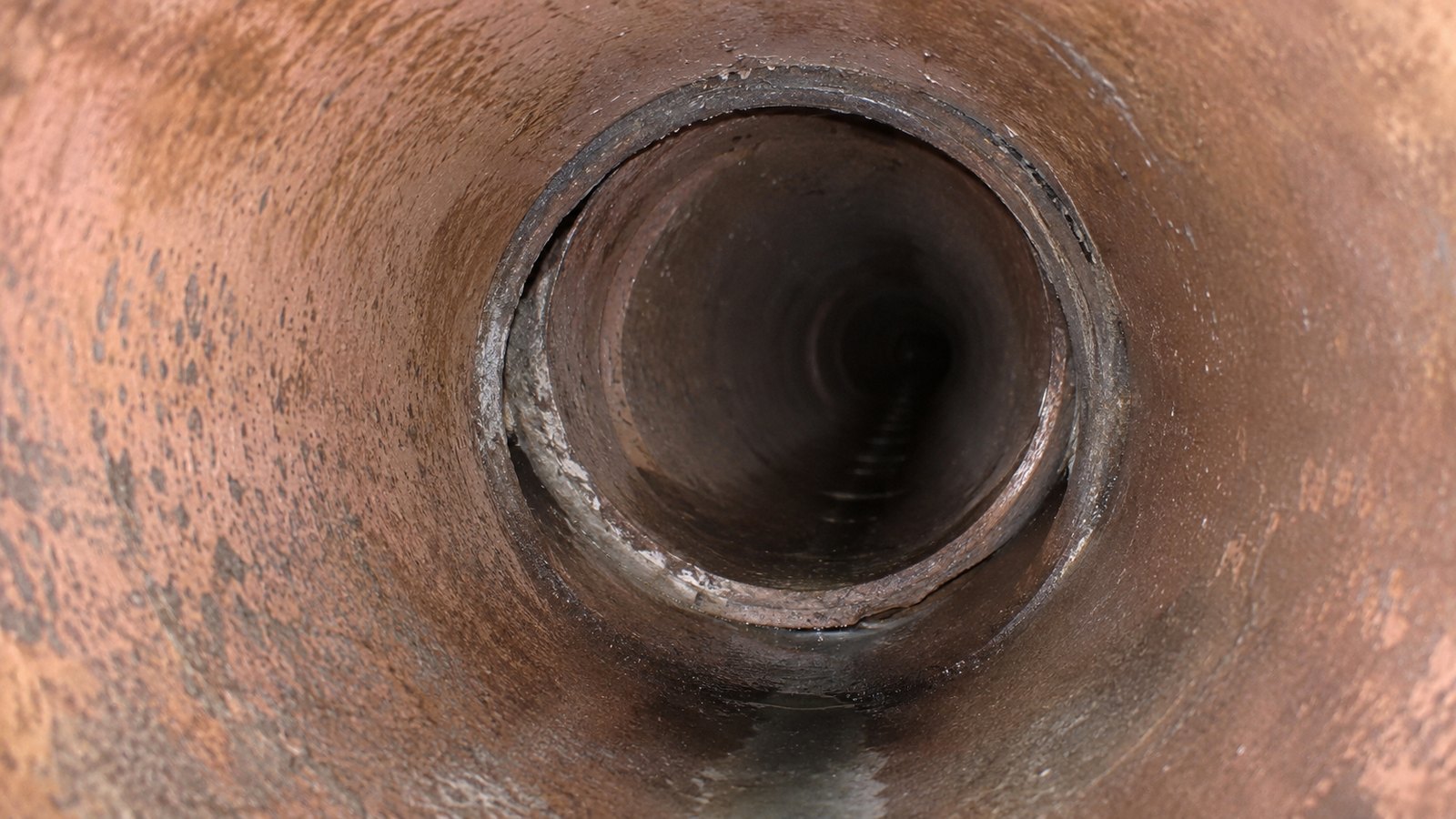
Why solids gather at the joint
Paper and wipes travelling along the invert can snag on a raised edge. Material then builds upstream until the drain blocks. After rodding, the same edge remains and the cycle can begin again.
Open joints can admit roots
Older socketed clay systems can develop gaps as the surrounding ground moves. Fine roots can exploit that opening and enlarge the obstruction over time.
The size of the step matters
If the pipes are still broadly in line, an internal repair may be possible after cleaning. If one section has shifted far enough to block much of the opening, a liner cannot straighten it; that section may need to be exposed and reset or replaced.
When a displaced joint becomes a real problem
A tiny offset seen high on the pipe wall may have little effect on flow. A step across the invert, where wastewater and solids actually travel, is more likely to catch material. The camera angle can exaggerate or hide that difference, so the position of the displacement within the bore matters.
Where the joint is open but not badly offset, sealing it may be possible without rebuilding the whole line. Where the pipes have moved far enough to close a substantial part of the bore, internal repair becomes harder.
Send the job to local contractors
If you need somebody to carry out the work, MyJobQuote can send the request to contractors in your area and invite up to three to quote. The service is separate from BlockedDrainsUK.com.
Request drainage quotesMyJobQuote is an independent third-party service. Any quotation or contract is with the contractor concerned.