Drain Excavation and Replacement
Some drains really do have to be dug up. If the pipe has collapsed, shifted across the line or lost a connection completely, there may be no continuous bore through which a liner can be installed.
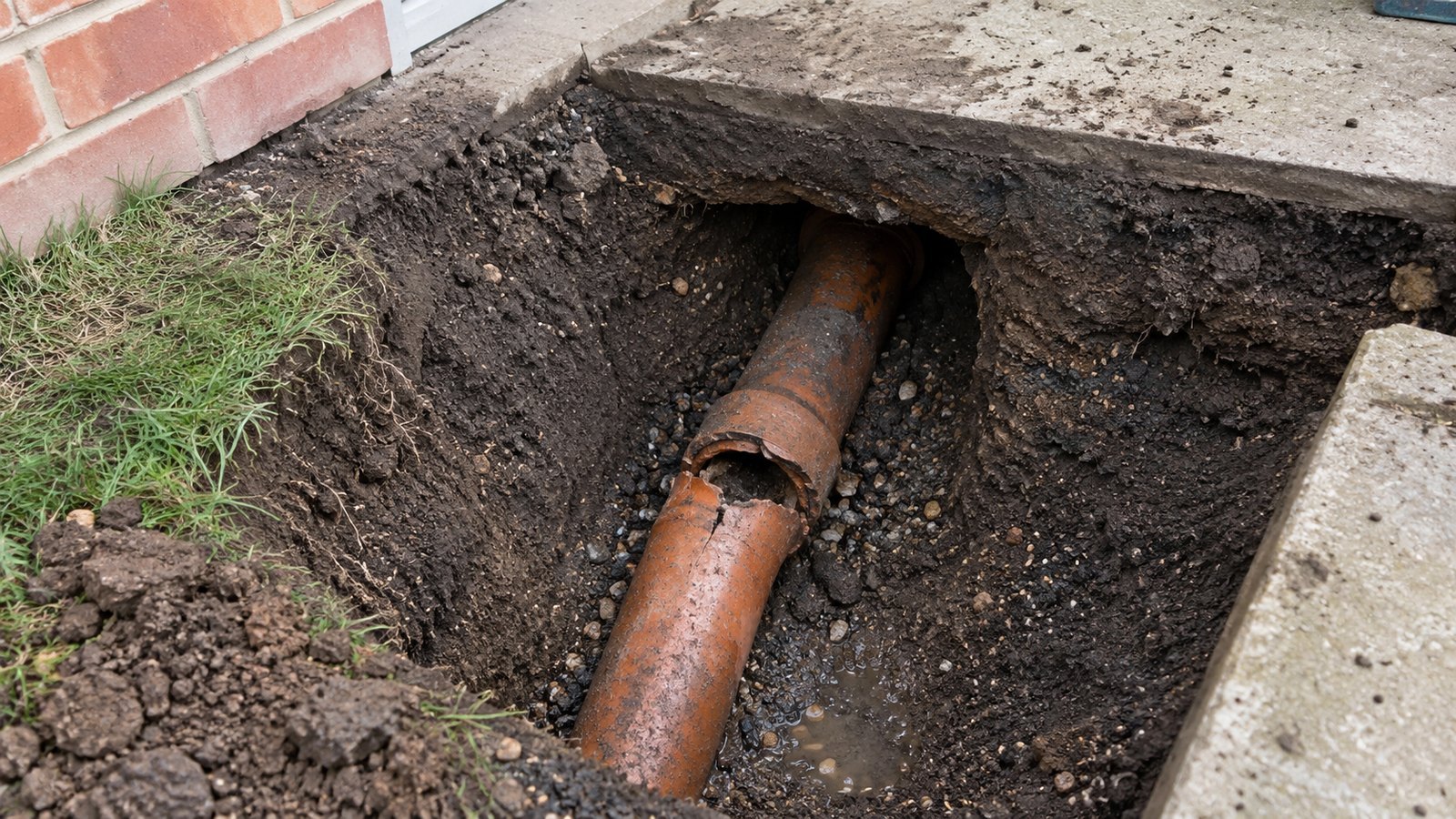
When digging may be necessary
- complete or near-complete collapse
- major displacement
- failed connections
- missing pipe sections
- severe deformation that prevents lining equipment passing
Where the drain lies can change the cost
A defect below lawn or soil is usually simpler to reach than the same pipe below reinforced concrete, a driveway or an extension. Depth and buried services also affect how the excavation can be carried out safely.
Keep the excavation as local as the defect allows
If the failed section can be located accurately from a chamber or sonde, the excavation can often be centred on that spot. Sound pipe farther along the run can then be left alone.
Know where the fault is before you start digging
Before digging, locate the defect from a known chamber and establish the drain depth as closely as possible. Gas, electricity, water and communications services may cross the same area. Deep trenches also need proper support, so this is not sensible DIY work.
Reinstatement is part of the repair cost. A technically simple pipe replacement beneath decorative paving may involve more labour restoring the surface than replacing the damaged metre of drain.
Request local contractor quotes
By submitting the drainage job through MyJobQuote, you can have up to three local contractors invited to quote. You are not requesting a quotation directly from BlockedDrainsUK.com.
Ask for local quotesMyJobQuote is an independent third-party service. Any quotation or contract is with the contractor concerned.