Drain Lining
Drain lining creates a new internal surface within the existing pipe. It can avoid excavation, but only where the original route still provides a usable path.
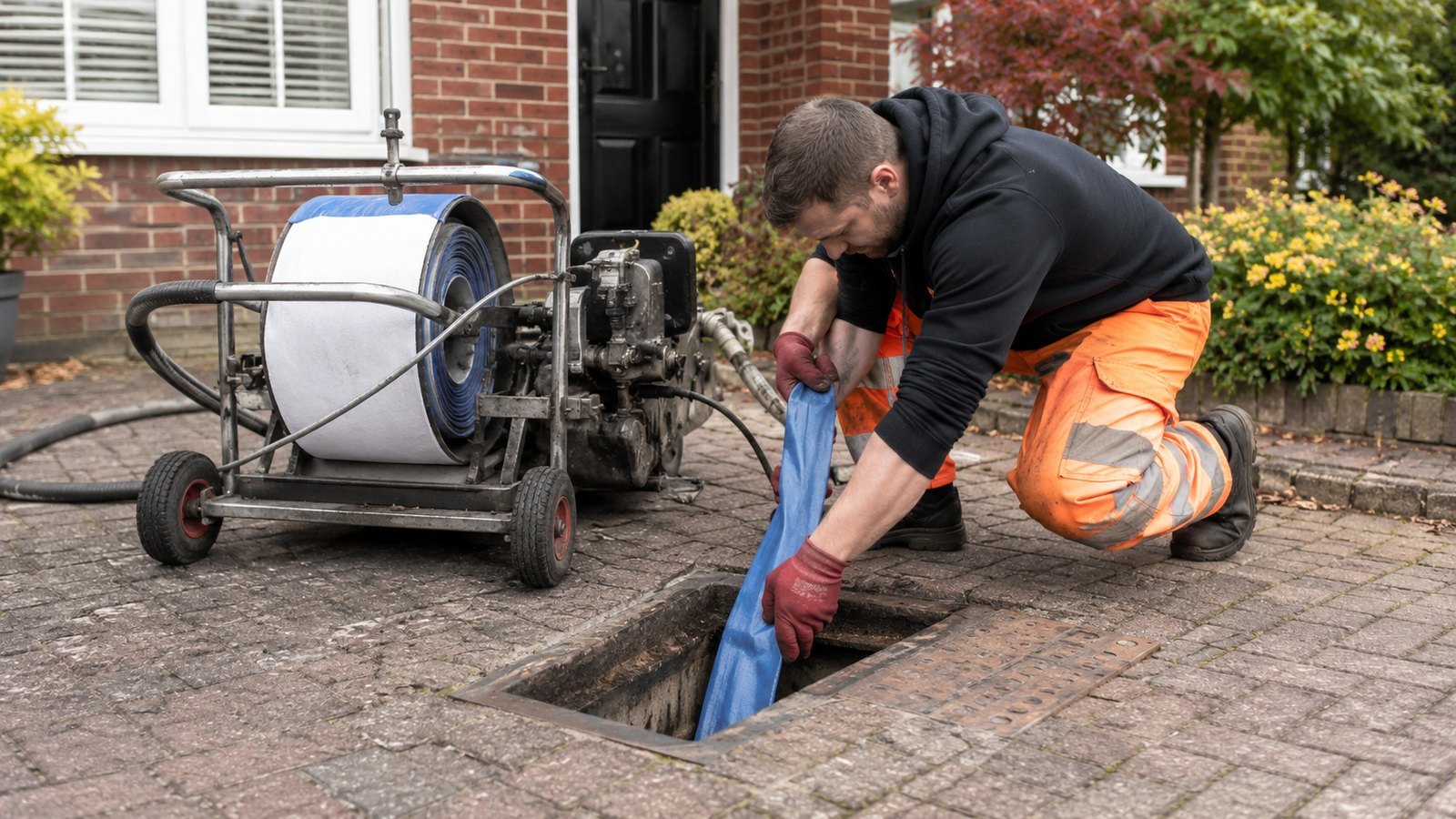
The pipe has to be cleaned and prepared first
Before lining, the contractor needs a clean surface and a clear bore. Roots, grease or loose fragments left in place can stop the liner sitting properly against the old pipe.
A liner follows the route of the old drain
The liner follows the shape that is already there. It cannot straighten a severe displacement or create a passage through a complete collapse.
Junctions and connections need to be dealt with properly
Branches joining the lined pipe have to remain open or be reopened accurately. Bends, diameter changes and access also influence whether lining is practical.
What the finished liner looks like inside the drain
Because a liner sits inside the original drain, it reduces the diameter slightly. A liner slightly reduces the inside diameter of the pipe. That is usually a small loss, but it matters more if the original drain is already too small or badly deformed.
After curing, the important checks are that the liner is continuous, connections are open and the repaired section has not created a new obstruction. Post-lining CCTV can provide that confirmation.
Put your drainage job out to quote
MyJobQuote can invite up to three independent local contractors to quote for the drainage work you describe. Their availability, prices and proposed methods can differ, so compare the details before choosing.
Get contractor quotesMyJobQuote is an independent third-party service. Any quotation or contract is with the contractor concerned.