Drain Rodding
Rods can break through a soft obstruction in a straight run and get the water moving quickly. They do not scour grease or scale from the pipe wall, so a narrow passage can be left through a much larger deposit.
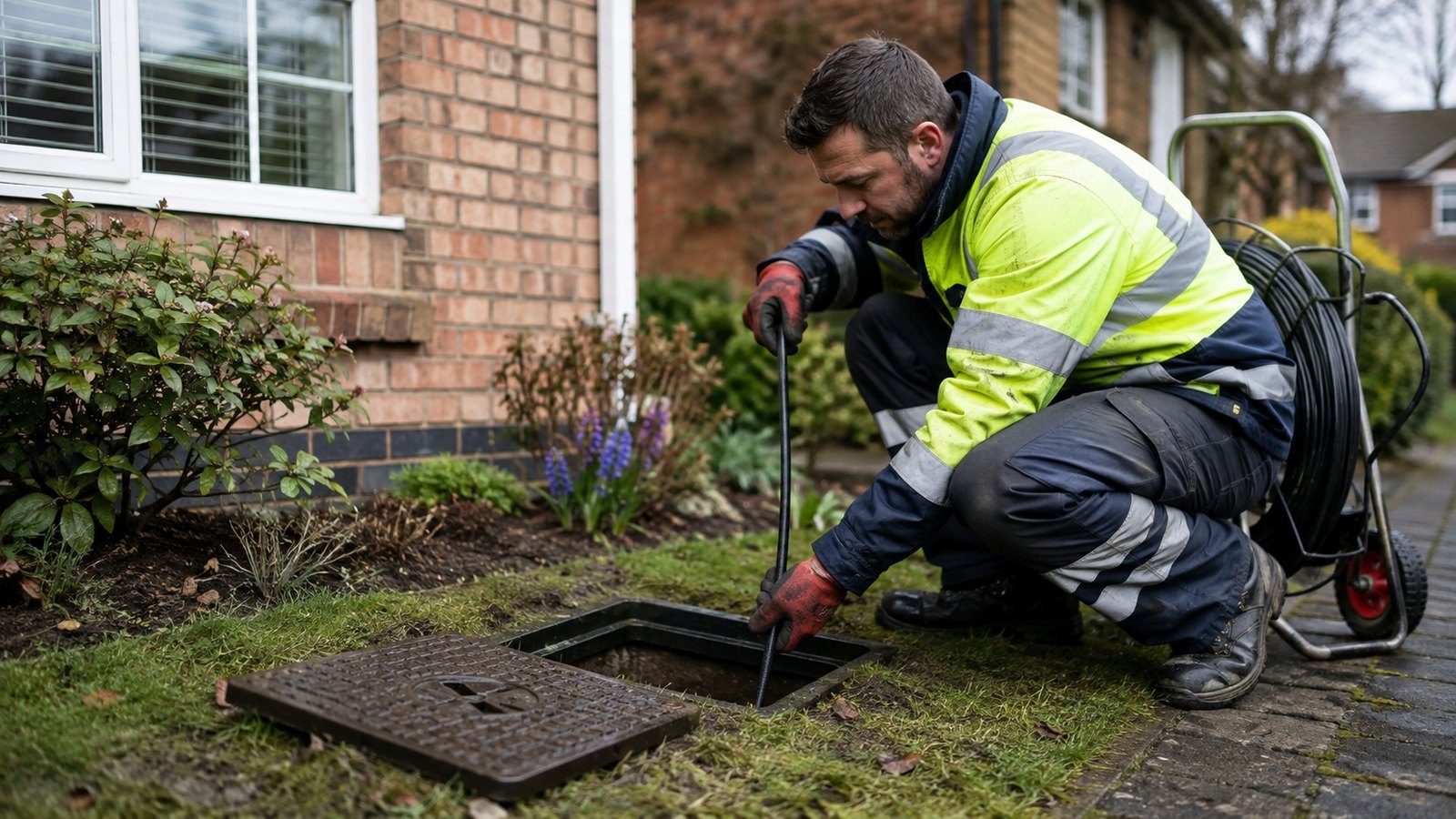
Rods work best where the route is fairly straightforward
Rods are normally introduced through a suitable chamber or rodding point. Bends, changes of direction and difficult junctions can limit how far they can be pushed.
Why a drain can block again
A rod may open a route through paper or soft debris while leaving grease, scale or rough deposits around the bore. The drain appears fixed until material begins catching again.
Forcing rods is not always a good idea
If rods repeatedly stop hard at the same distance, do not simply force them harder. Measure the distance from the chamber and use another access point or a camera to find out whether the obstruction is a bend, root mass, displaced joint or collapse.
What rodding can tell you
A hard stop at the same measured distance on repeated attempts is useful information. Mark that distance from the chamber; it gives the camera operator or excavation crew a specific section to check rather than searching the whole run.
Do not force rods through a route you cannot identify, and do not try to lift a chamber cover that is too heavy to handle safely.
Compare prices for the drainage job
You can use MyJobQuote to invite up to three local contractors to quote for the drainage work. The aim is to give you more than one response to consider where suitable contractors are available.
Compare local quotesMyJobQuote is an independent third-party service. Any quotation or contract is with the contractor concerned.