Can a Leaking Drain Cause Subsidence?
A leaking drain can contribute to local ground movement in some circumstances, particularly where escaping water washes fine material from around foundations or drainage trenches.
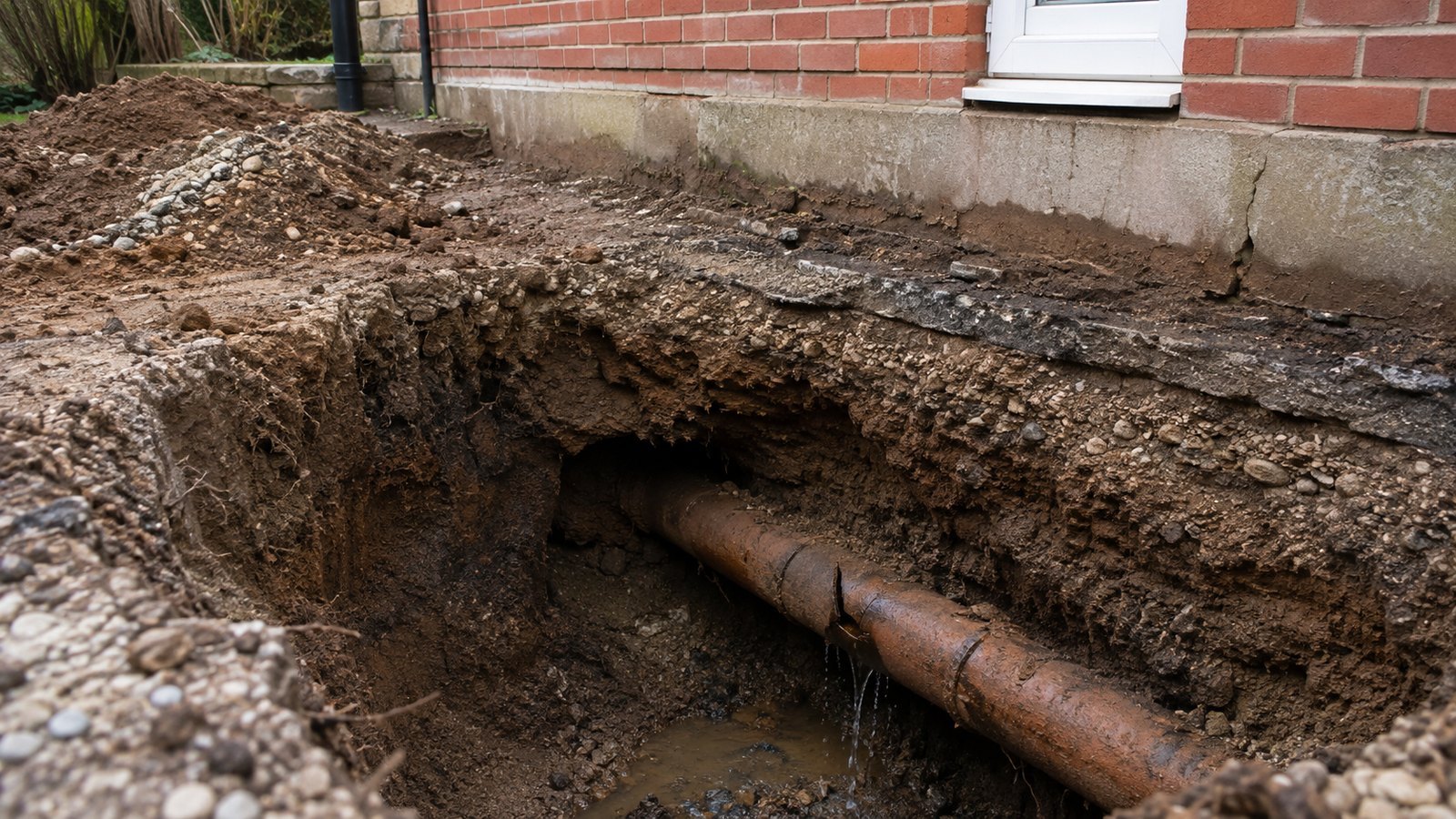
The drain problem needs to make sense of the building movement
A crack in a drain and a crack in a wall can exist on the same property without being connected. The case is stronger when leakage is close to the movement and there is evidence of softened ground, washout or a void around the pipe.
Look for signs that soil has actually been washed away
Washout, voids, eroded pipe bedding or concentrated movement close to the drainage run strengthen the case for a connection.
What would link the drain to the movement?
Many cracks in buildings have nothing to do with drains, and plenty of cracked drains never cause movement in the building. The drainage evidence has to be considered alongside the cracking, the ground and the rest of the property.
Fixing the drain does not repair existing building movement
If a leaking drain has washed soil away or softened the ground, repairing the pipe stops more water escaping but it does not put the lost support back. Existing cracks may still need monitoring, and more serious movement may need separate structural advice.
Likewise, repairing a cracked drain found during a subsidence investigation does not prove that the drain caused the movement. The chronology and physical relationship still need to fit.
Ask MyJobQuote for local drainage quotes
MyJobQuote can invite up to three local contractors to quote for the drainage work you describe. It is an independent third-party quotation service rather than a drainage department of this website.
Ask for local quotesMyJobQuote is an independent third-party service. Any quotation or contract is with the contractor concerned.