Grease and Fat Blockages
Fat may enter the waste as a warm liquid but cool against the pipe wall. Over time it can combine with other material and reduce the usable diameter of the drain.
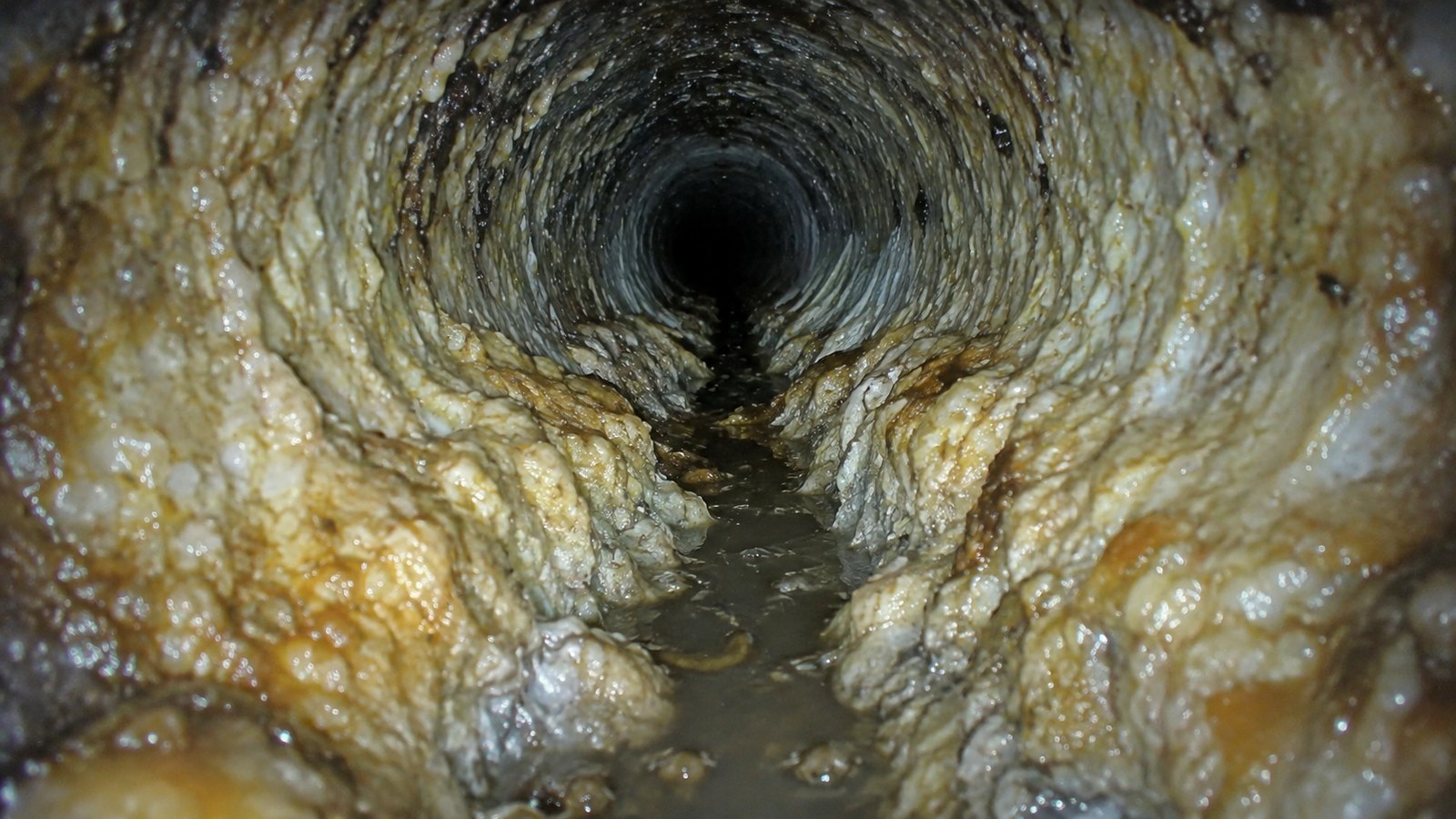
Why grease blockages keep coming back
The surface becomes rough and sticky. Food particles and wipes then catch more easily, so a drain that is partly restricted can begin blocking with material that previously passed through.
Opening a narrow passage may leave most of the grease behind
Rodding can push a hole through a soft grease blockage and make the sink run again, while thick deposits remain on the wall. Jetting is better suited to washing a longer coated section back towards its full bore.
How to reduce the chance of another grease blockage
Wipe pans and trays before washing them and collect larger amounts of cooking oil separately. That prevents a freshly cleaned kitchen branch from building the same waxy coating again.
Why kitchen waste pipes often show the problem first
Grease often sets in the smaller kitchen waste pipe and the first underground section beyond it, where the water cools. The bore can narrow gradually for months before anyone sees a complete blockage, so slow kitchen drainage can be the first sign.
Strong drain chemicals may open a small path through grease without removing a thick coating farther along the pipe. Do not mix different products; if the restriction is substantial, mechanical cleaning or jetting is the more direct way to remove it.
Find contractors willing to quote
Submitting the job through MyJobQuote allows up to three local drainage contractors to be invited to quote. You can speak to those who respond and make your own choice about the work.
Invite contractors to quoteMyJobQuote is an independent third-party service. Any quotation or contract is with the contractor concerned.