Leaking Underground Drain
A leaking buried drain rarely produces a neat wet patch directly above the defect. Water can escape at an open joint or fracture and disappear into the surrounding ground, so the evidence often comes from washout, soft ground, voids or repeated loss of bedding.
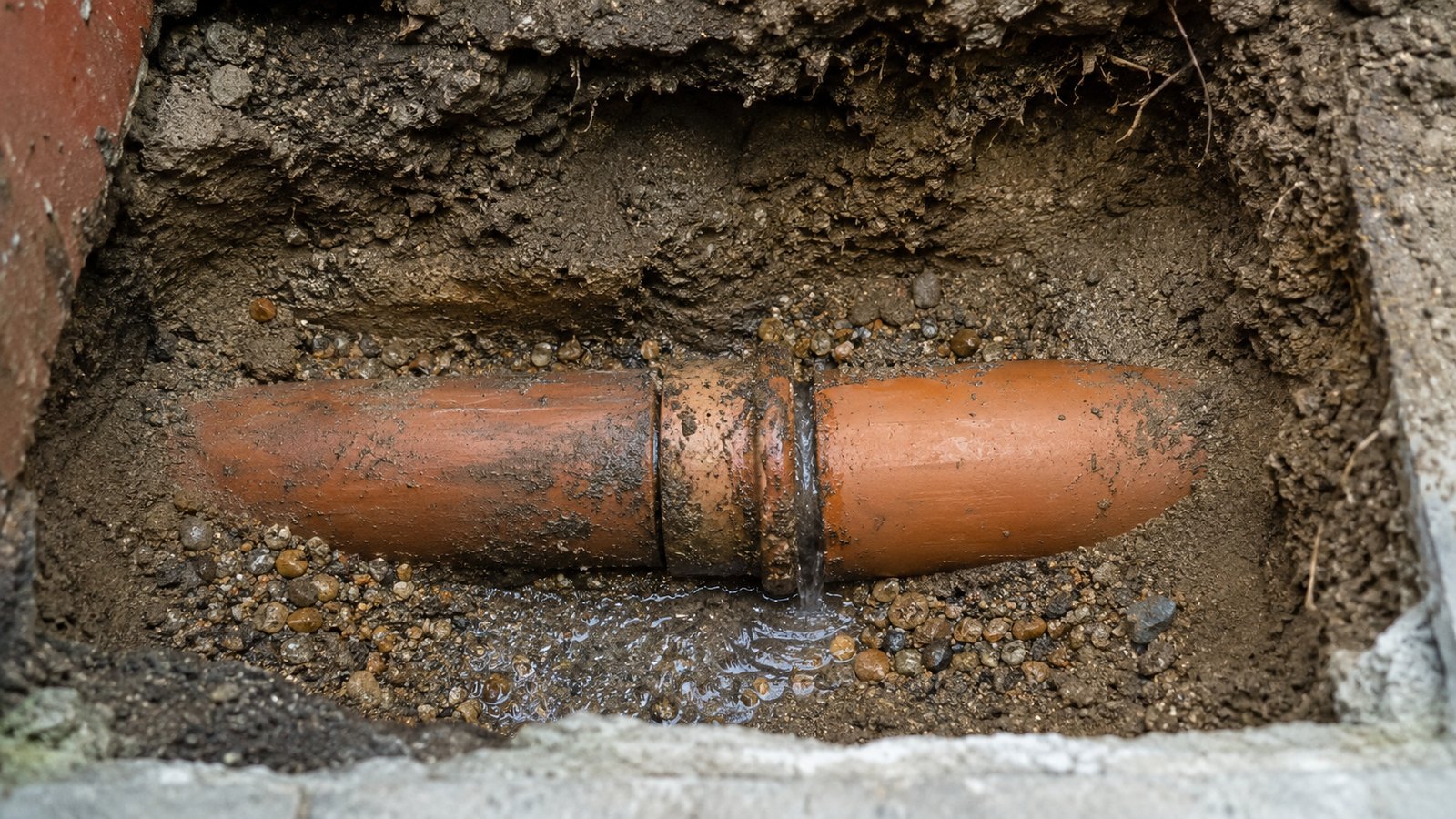
Look for more than one clue
Persistent soft ground close to a drainage route, unexplained washout, repeated loss of bedding or visible leakage in a chamber can justify investigation. A damp patch by itself does not prove a drain is leaking.
A camera cannot show every leak
A camera can show the internal condition of the pipe but may not prove whether a hairline defect is leaking under every flow condition. Dye testing or other investigation may sometimes be useful.
Locate the leaking section before choosing the repair
If the leak comes from one short section and the pipe still has a usable shape, a patch or liner may be possible. If the pipe has moved badly or collapsed, the damaged section may have to be dug out.
Some defects leak only when the pipe runs full
A joint may lose water only when the pipe is running full, while a crack above normal flow level may remain dry most of the time. Conversely, a low defect can leak whenever wastewater passes. This is one reason why one still CCTV image may not describe the whole behaviour of the pipe.
Near a building, camera footage is only part of the evidence. Look for washed-out bedding, soft ground or a void close to the same measured point before blaming a small crack for movement or dampness.
Ask nearby drainage contractors to quote
MyJobQuote can invite up to three contractors local to the property to quote after you enter the job details. You can then decide which, if any, you wish to contact further.
Get contractor quotesMyJobQuote is an independent third-party service. Any quotation or contract is with the contractor concerned.